Finding Grounding, Connection and Sacred Practice for Healers and Seekers
“To be truly visionary we have to root our imagination in our concrete reality while simultaneously imagining possibilities beyond that reality.” —bell hooks, Teaching to Transgress
Everywhere I look lately — in women clergy groups, chaplaincy forums, therapist communities, and spiritual seeker circles — I hear variations of the same ache:
• “I feel powerless. I don’t have agency in the institutions I serve.”
“I’m spiritually exhausted. I’m running on fumes.”
“These times are so despairing. I just want to crawl into a hole sometimes.”
• “I feel isolated. I can’t risk speaking honestly about how I’m feeling.”
I’ve known each of these cries in my own body; I have been in those dry, lonely, and powerless places too. They are not abstract concepts. They are lived, embodied realities — a tight jaw, a heart heavy with grief, sleepless nights, a body that whispers, I’m exhausted, I’m grieving, and I’m struggling.
It’s all too much.
Because it is.
And also.
As I’ve learned and witnessed, these can, over time, be invitations. They can be signals that you’re paying attention. That your body is here, and your soul is ready for attention.
These aches call me back to practices that root me back into love, into the land, into my body, into community.
Perhaps soul exhaustion can be thresholds, places where we can host self-compassion and curiosity. Perhaps they are opportunities to rediscover how we actually do have agency and autonomy in our world, despite broken systems and toxic stress and collective trauma.
The Pressure of Powerlessness
We can feel stuck when we face the uphill challenge of broken and toxic systems that harm. We don’t want to be complicit, but we can feel as if our hands are tied. A chaplain friend once told me: “I feel like my voice has been stripped away by policy. I can’t say what I know to be true.” Therapists I know also echo this sentiment, describing a fear of losing licensure or credibility if they speak too honestly. We are seeing in broad daylight now with the rise of censorship on the national stage, and how this sows fear and makes us wonder if it’s worth using our voice after all, or makes our hair feel like its on fire. Either way—we can feel deeply helpless.
I worked at an inner city Philly Head Start when I was in college, assisting little 3 and 4 year old kiddos whose reality was nothing like my known privileged and safe world. I remember seeing their bright faces of hope and sunshine every day, and ached with knowing how systems were built to harm them and their families, not help. We were a little island, there, at Head Start, but I always left wishing I could do more but knowing my hands were tied. I would leave sometimes with a pounding head and tears I couldn’t quite shed. My body carried the dissonance.
Moral distress lands in our muscles and breath before our mind even names it. Powerlessness doesn’t live in the intellect — it freezes the nervous system.
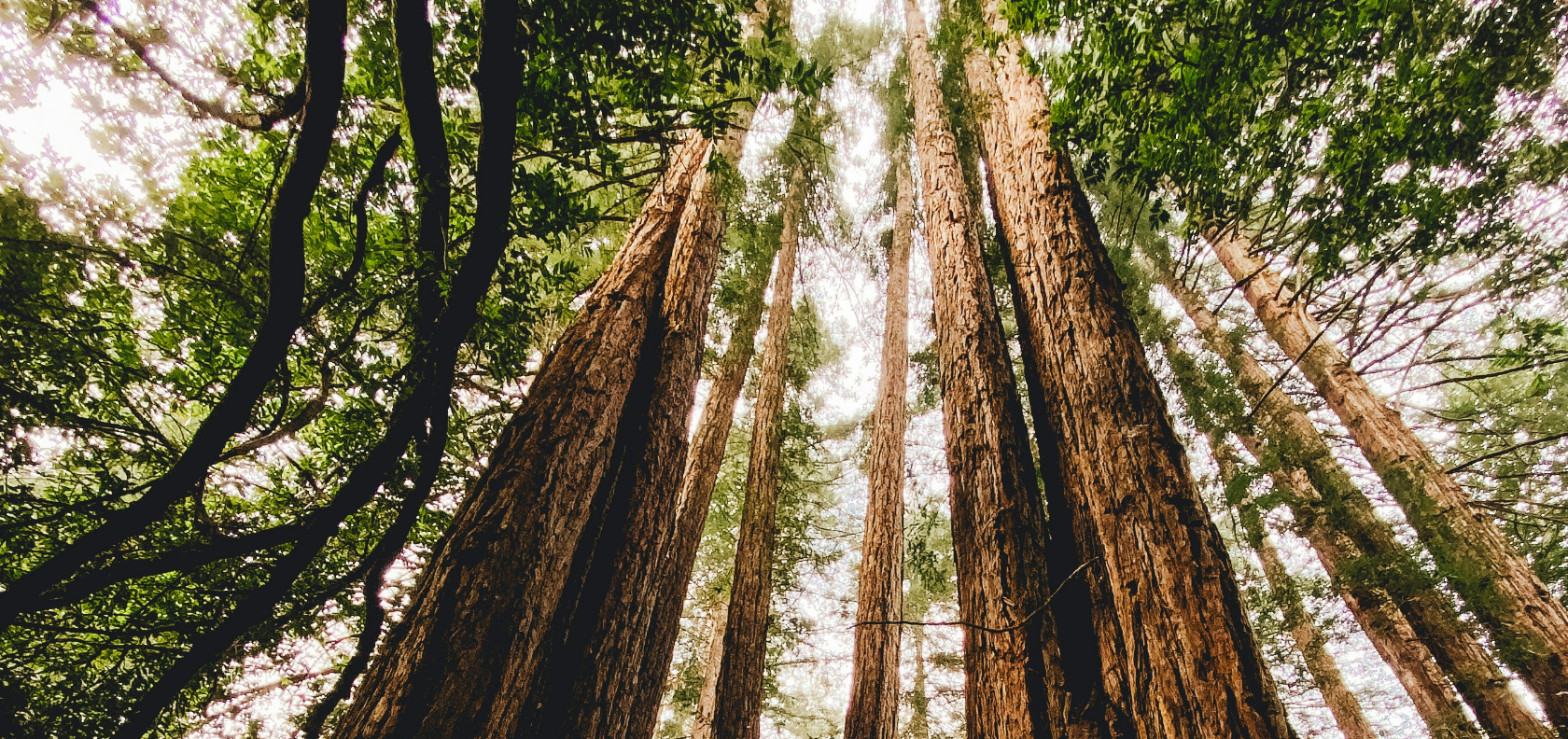
look up, says the trees. all you need is here.
The Ache of Spiritual Exhaustion
When we are faced with chronic stress and moral fatigue, we can feel as if our soul has no room to breathe. It’s true: when our safety systems are not met, we cannot access hope, connection, love, creativity. We can call this “soul fatigue” and “spiritual exhaustion.” Rituals feel hollow. Meditation fails. Silence feels oppressive or activating instead of renewing.
I’ve known this in my own practice. Sitting in meditation only to feel like I was pressing against anxiety, my monkey brain going at it.
What shifted was not more effort, but turning outward to the earth itself. I began returning to one tree, one patch of ground, week after week. I let myself sit without agenda. I named what I could see, hear, and feel. Sometimes, oftentimes in the beginning, it was hard. But slowly, something changed. I felt a presence beyond my own world, a reminder that connection is always there, waiting for me.
My dear friend and spiritual direction colleague Justin Ferko is an eco-justice spiritual companion, and offers a sit spot practice often in his work. Here is an example:
Sit-spot practice:
• Choose one outdoor place — a tree, bench, or garden. Return to it 2–3 times a week.
• Spend 10–20 minutes simply noticing: 5 things you see, 4 you hear, 3 you smell or feel, 2 you can touch, 1 breath you witness.
• Offer a single line of gratitude or intention.
Ecotherapy or eco-justice spiritual direction affirms what indigenous and shamanic traditions have always known: the land itself can hold, resource, and change us. When our spirits are depleted, we don’t have to “fix” ourselves. We can rest against something bigger.
I often whisper at the end of these sits: “May the soil carry what I cannot.” And somehow, I rise a little lighter.
The Isolation of Silence
Humans are built for community. Without it, we perish. Our deepest human wound is isolation—and we can see this clear as day as to how this can be so true in the disconnected, discordant times we’re living in. Indeed, folks begin to withdraw and believe that being internal and disconnecting is safe. I have heard folks say: “I can’t risk speaking my truth here. It isn’t safe.”
I know that loneliness too. In my early career, I didn’t know how to put words to my moral dissonance, my emotional and spiritual fatigue, and my disconnection. I learned to swallow my distress because I had no spaces where I could see mirrored back to me my experience, or skill building on how things could be different. My soul craved connection but felt brittle in burnout.
Healing came not in self-help books or CEU trainings. It came in my stopping the train, getting off, and finding safe people in trusted circles — peers who listened without judgment, who witnessed my grief without rushing to fix it. The relief of being witnessed was itself medicine.
Peer soul care is is moral repair work.
It interrupts shame, restores dignity, and rebuilds the web of belonging.
Returning to Resourcing
These practices do not erase injustice, undo broken systems, or give you a quick fix for feeling overwhelmed or aggrieved. My hope, though, is with bubbling awareness of how the soul can survive and will survive, soul care practices can mirror back your experience with gentleness to reclaim that self-trust. It’s why I offer retreat series like this one coming up the end of the month, on Cultivating the Soil of the Soul, for inner wisdom in light of moral distress and psychospiritual strain.
When we have connection to safety, in our selves and in community, we can reclaim that sense of sovereignty that is fully connectied to Source/Universe/Creativity, where
• Agency that begins in the body,
• Renewal found in relationship with the earth, and
• Connection restored in circles of witness.
This is what I want most for the women I walk alongside: that even in exhaustion and silence, you would know that your soul is calling out, and that you can, indeed, listen.
The soul can be silenced for a time — but it always remembers how to sing.
Resources for Continued Renewal
• Books:
• bell hooks, All About Love and Teaching to Transgress
• Francis Weller, The Wild Edge of Sorrow
• Joanna Macy, Active Hope
• Ecotherapy & Nature-Based Practices:
• The Nature Fix by Florence Williams
• Justin Ferko, Wild Spirit Paths
• Community Support:
• Introspective Spaces for healthcare professionals
• My Offerings:
• Retreat Intensives — for deeper renewal, soul care, and re-rooting
• 3 Part Series: Cultivating the Soil of the Soul—renewing in light of moral injury and psychospiritual strain. Join us Here.