The first time I went to a shamanic practitioner, I didn’t know what to expect. I sat in her office, open and curious, but also kind of nervous. What was I going to “see” in my journey? Was I going to do it “right”? What if I don’t “see” anything?
I didn’t have to worry; my shamanic practitioner was patient and as she drummed, I relaxed. When I did so, my mind did what all minds do under the release of thoughts and support of steady heart-beat like drumming: it wanders.
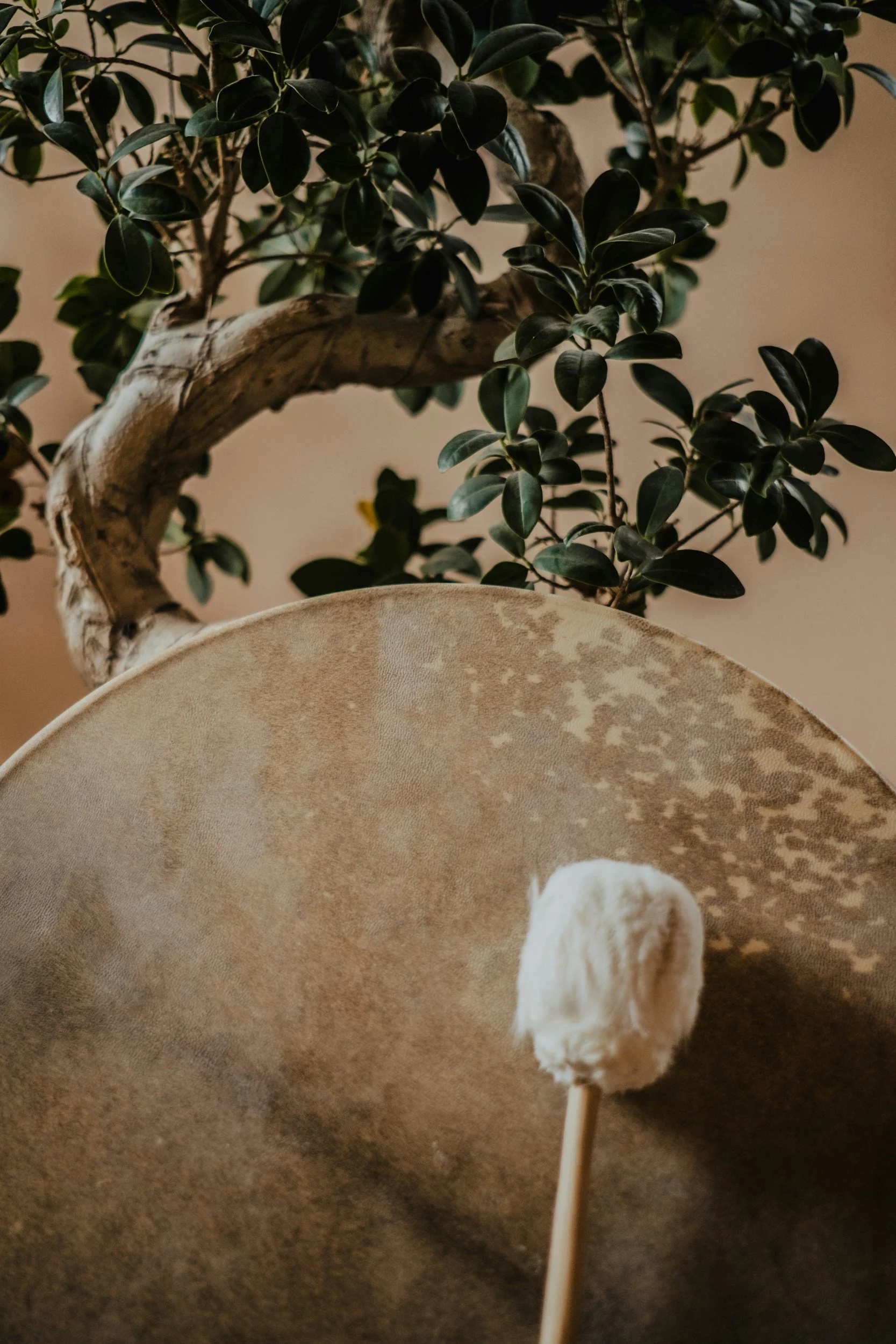
We went into the journey with an intention: to meet my animal guide. Sure enough, I had an encounter that to this day informs me and specific parts of how I move in the world. The animal image that came reminded me of my sovereignty. It reminded me of my wholeness. It helped bring, in no small part, back to myself.
That first journey changed me forever. It reminded me that mystery and imagination are potent forces for growth. To this day, that orientation informs not just my personal work but also, and importantly so, my professional work.
Access to the Liminal is Universal Human Ability
Most of us have had experiences with dreams and synchronicity. Perhaps a loved one passes away and you see signs that they are present. Perhaps you have had a dream about them. Or perhaps you “knew” something before something happened, and when it did it confirmed that intuition. All of us have these spontaneous experiences on some level with the liminal, whether we "believe" or not. When we journey and access liminal states such as doing journey work, we have an opportunity to be open to “messages”, whether they be from what we perceive as our inner wisdom, from the universe, from guides or ancestors, from elements. What shamanic practice offers is an opportunity for openneness into those unseen realms so that you can build and grow into that creativity, that brain-based resilience, and an openness to experience that underlies all healing.
Scientists call it delta waves, shamans call it Spirit. It doesn’t matter the basis: it’s clear that our brains are wired for the liminal. Scans show activity in all cortexes and memory centers when in active imagination and journey states–and this creates whole-brain interconnectivity that is often not experienced in every day life. Dreams, like journeys, can be places where our brains can be both in active state and also resting, at the same time. We come out of dreams and journeys refreshed and healed, restored and reconnected– neurologically, spiritually.
Crisis of Mistrust
Thing is, we learned to not trust our wandering minds. When was the first time someone laughed at you when you said you believed in the tooth fairy? Or did you feel like you have to keep to yourself that you felt like your grandmother visited you in a dream? We are told to not trust our imagination, nor trust the openness that edges into the unknown. Apparently the unknown is scary. Especially for those of us steeped in Western psychological or medical models, we are taught that imagination can indeed be quite risky. Isn’t imagination gone wild really a mental condition? Isn’t that what the DSM taught us?
Mistrust in our ability to wonder, our connection to awe and curiosity, is steeped in modern culture that over values rational thought over intuitive, gut-based knowing. Hyperrationalism is a vestige of patricarchal societies and infects our ability to detect nuance and find color within spectrums. When we rely too heavily on reason, we drop our potential to explore beauty and joy–and the delights that arrive when we are present to surprise.
We’ve lost our ability to be enchanted.
Schooled in decades of clinical Western psychological inquiry, I had to begin deconstructing my diagnostic perspective to orient myself back to the curiosity of nuance and sacred reverence. It began as I leaned into my Jungian training and used dreamwork actively in my work. I have been a dreamworker since I was a child and always believed in the power of dreams and their invitations into the wonders of the inner world. When I began working with shamanic practice, it was the same invitation: when I am receptive, when I allow, my mind, body AND spirit begin to know what it is to rest. And in that rest, I can open to the possibilities. I saw this with clients, I knew this in my heart, and I saw its fruits in how this began to open channels within and between those I knew and worked with.
Liminality Begins with Presence
Our ability to be receptive is directly related to our ability to be present with ourselves. Sadly, this has become even more challenging in recent years, with the addictions to phones, social media, and technology at our fingertips. When we have experienced chronic stress and trauma, being present is particularly risky and threatening. We get an opportunity to be present with ourselves at all moments of the day, yet most of us don’t take the time to reconnect unless we’re prompted. It can take time–and sometimes lots of patience–to orient back to our inner wisdom. We often need trauma-informed support from helpers who understand the nervous system’s attempt at self protection and its belief that safety is assumed when we are NOT being fully present.
First steps into orienting to presence often is suggested by noticing our breath, or noticing our body in space. Perhaps it is acknowledging the need for your body to shift its place in space, and to honor its need to go to the bathroom when you’ve been putting it off. Resourcing the body with acknowledging its needs is a basic step towards the type of presence that is required to access liminality.
In psychotherapy, the container for the shamanic practice is held with the full knowledge of the client’s story, clinical background, and consent. The information gathered in the journey—the client’s or the therapist’s—can be fruit for the work of integrating healing into the therapeutic framework. In individual, one-off sessions outside of therapy, shamanic sessions with a skilled and trained, trauma informed shamanic practitioner can similarly be held with ethical standards of emotional safety as well as geared towards the client’s needs and goals.
Connection is Personal
In my years hosting space for folks, I have noticed that folks are most able to be open to creativity when they feel safe and secure in their bodies, and safe and secure in the relationship or therapeutic container (ie, our connection). This is extremely personal, and can change at any time. In one moment, we may feel safe, and in another, activated.
This is why trauma consciousness is extremely important; whether we are hosting space or are the one receiving help, connection is extremely personal and autonomy and agency of each individual is primary. When folks use the intelligences of the intuition, the body relaxes. I see it all the time in my practice: when we trust our intuition, we are more connected to our power centers that is the inner compass.
This inner power is a potent force that resources the creativity that arises when we are present. Those centers are in full connection with the safety and security centers of the brain as well as keeps online the prefrontal cortices that activate awe and connection. When we nourish our souls, our mind-bodies come alongside. And when we nurture our mind-bodies, we have an opportunity to discover the fullness of our souls.
Curious about my shamanic work? Find Soul School Guided Journey Offerings here and individual sessions here.